

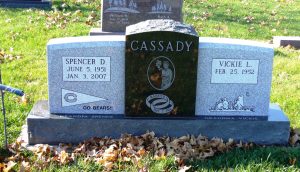
When most families think about a monument, they picture the polished granite, the lettering, and the meaningful design elements that reflect a loved one’s life. What often goes unnoticed is what lies beneath the surface. The foundation is one of the most important parts of any memorial, even though it is rarely seen.
At Abel Monument Company, with locations in Pekin and Canton and service to cemeteries throughout Central Illinois, we know that long-term durability starts below ground level. A carefully built foundation helps ensure that a monument remains stable, level, and secure for generations.
What Is a Monument Foundation?
A monument foundation is a reinforced concrete base installed beneath a headstone or memorial. It is designed to support the weight of the granite and distribute it evenly across the soil.
Granite is incredibly strong and long-lasting, but it is also heavy. Even a smaller upright monument can weigh several hundred pounds. Larger family memorials can weigh much more. Without a properly installed foundation, that weight can cause the monument to shift, sink, or lean over time.
The foundation acts as the structural anchor for the entire memorial. It helps maintain alignment and protects the monument from soil movement and settling.
Why Foundations Are Especially Important in Illinois
Here in Central Illinois, weather and soil conditions make foundation quality even more important. The region experiences significant seasonal changes, including freezing winters and wet springs.
When moisture in the ground freezes, it expands. When it thaws, the soil contracts. Over time, this freeze and thaw cycle can cause movement beneath a monument. In addition, clay soils common in this area can expand when wet and shrink when dry.
If a monument does not have a properly sized and reinforced foundation, these natural shifts can result in:
- A noticeable lean
- Uneven settling
- Cracks in the base
- Gaps between the stone and the ground
A well-constructed foundation is designed to handle these changes. It provides stability through the seasons and protects the integrity of the memorial.
How Monument Foundations Are Installed
The process of installing a foundation begins with careful measurement and preparation of the site. The area is excavated to the proper depth based on cemetery requirements and local soil conditions.
Next, reinforced concrete is poured to create a solid base. Reinforcement materials add strength and help prevent cracking over time. Once the concrete has cured, the granite base and monument are carefully set in place and leveled with precision.
Proper leveling is essential. Even a slight imbalance at installation can become more noticeable over the years. Attention to detail during this stage makes a lasting difference.
At Abel Monument Company, completing work in house allows our team to oversee each step with care. From design approval to final placement, every detail is handled thoughtfully.
Cemetery Guidelines and Requirements
Each cemetery may have its own rules regarding foundation size, thickness, and installation standards. Some require specific dimensions or approved installation methods. Understanding these requirements ahead of time helps prevent delays and ensures compliance.
Because we serve cemeteries within a 50-mile radius of our Pekin and Canton locations, we are familiar with many local guidelines. That knowledge helps families avoid unexpected complications during the installation process.
What Happens When Foundations Fail
Occasionally, older monuments show signs of foundation issues. You may see stones that lean slightly forward or backward. In some cases, flat markers may appear uneven or sunken.
These issues are usually caused by shifting soil or inadequate support beneath the stone. Over time, this movement can affect both appearance and safety.
Repairing a monument that has shifted often requires lifting the stone and rebuilding or replacing the foundation. This can be more costly and disruptive than installing a strong base from the beginning. A proper foundation is an investment in long-term stability.
Foundations for Different Types of Memorials
Both upright monuments and flat markers require stable support. While the foundation style may vary depending on the memorial type, the goal is the same. The stone must remain level and secure.
For larger family monuments or companion memorials, the foundation must also account for future additions such as additional inscriptions. Planning ahead allows the base to support the memorial as it evolves over time.
Craftsmanship That Extends Below the Surface
Quality craftsmanship is not limited to engraving and design. It also includes the structural elements that ensure a memorial stands with dignity for decades.
As a family-owned business with more than 80 years of experience serving Central Illinois, Abel Monument Company takes pride in handling the work in-house. This approach allows us to focus on precision and long-term durability at every stage.
Families are involved in the creative process from the first meeting with a designer to final approval of the layout. That same level of care continues through installation and foundation preparation.
A Lasting Tribute Begins with a Solid Base
A monument represents remembrance, love, and legacy. It is meant to endure through changing seasons and generations of visits.
While the polished granite and custom engraving are what families see, the foundation is what allows that beauty to last. Taking the time to build it correctly ensures that the memorial remains stable and respectful for years to come.
If you are considering a monument in Pekin, Canton, or the surrounding communities, understanding the importance of a proper foundation can help you make a confident and informed decision. A strong base beneath the surface is what allows a meaningful tribute to stand tall for generations. Contact Abel Monument Company at 309-346-4186 (Pekin, IL) or 309-647-0105 (Canton, IL) today or visit us online for more information!
Leave a Reply